
The short answer
You need a new chimney cap or chase cover when you see water in the firebox, hear animals in the flue, or notice rust, staining or flaking brick. EverFlame inspects the chimney, measures the opening, and installs a properly sized cap or custom-fit chase cover with care inside and on the roof.
A chimney cap sits on top of the flue and keeps out rain, animals, leaves and stray sparks. A chase cover is the metal top on a framed chimney chase, the boxed-in chimney common with factory-built fireplaces, and it sheds water away from the enclosure and around the flue pipe. When either one is missing, rusted through or the wrong size, water and wildlife find their way in, and the damage usually shows up well below the roof, inside the firebox, on the brick or in the walls. EverFlame Chimney Care measures, fits and installs chimney caps and chase covers for homes in New York City and nearby cities. Before anything goes on top, we look at the flue below it so a new cap isn't sealing in a problem that needs attention first.
Signs you need it
Most cap and chase cover problems announce themselves slowly. Homeowners tend to notice the symptoms inside the house long before anyone looks at the top of the chimney. If you see any of the following, the top of your chimney is worth a closer look.
- Water or damp ash in the firebox after a rainstorm or snowmelt
- A musty or strong creosote smell, especially in humid weather, when rain mixes with deposits in the flue
- Scratching, chirping or rustling sounds from inside the chimney, a sign birds, squirrels or raccoons have moved in
- Leaves, twigs, nesting material, or brick and mortar flakes collecting in the firebox
- White, chalky staining on the outside brick, which points to water moving through the masonry
- Rust streaks running down the siding below a chase cover, or a cover that sags and holds standing water
- Poor draft or smoke rolling back into the room on windy days, which can happen when the top of the flue is open or the wrong cap is installed
What's included
Every cap or chase cover job follows the same checklist, whether we're replacing a rusted cover on a house in Queens or adding a cap to a brownstone flue that never had one.
- A visual check of the chimney exterior, crown and existing cap or cover
- A look down the flue for blockages, nests and visible damage, with a camera where the flue can't be seen clearly by eye
- Removal of any nesting material or debris found at the top of the flue
- Exact measurement of the flue tile, crown or chase top so the new piece fits properly
- A cap or chase cover sized for your chimney, with mesh that keeps animals out without restricting draft
- Secure fastening suited to the chimney type, including multi-flue caps where several flues share one crown
- A sloped chase cover design that sheds water off the chase instead of letting it pool
- Removal and disposal of the old cap or cover
- Photos of the finished work and a plain-language note on anything else we saw that needs attention
How our crew works inside your home and on the roof
Even though the main work happens on the roof, we usually need to check the chimney from the fireplace side too. Before we open the damper or touch the firebox, our technicians lay drop cloths from the door to the hearth and set up a HEPA vacuum so soot and debris don't drift into the room. If animals or a nest need to be cleared, we use rotary brushes and the vacuum to pull material down and out of the flue cleanly, and we close up the area before we leave it.
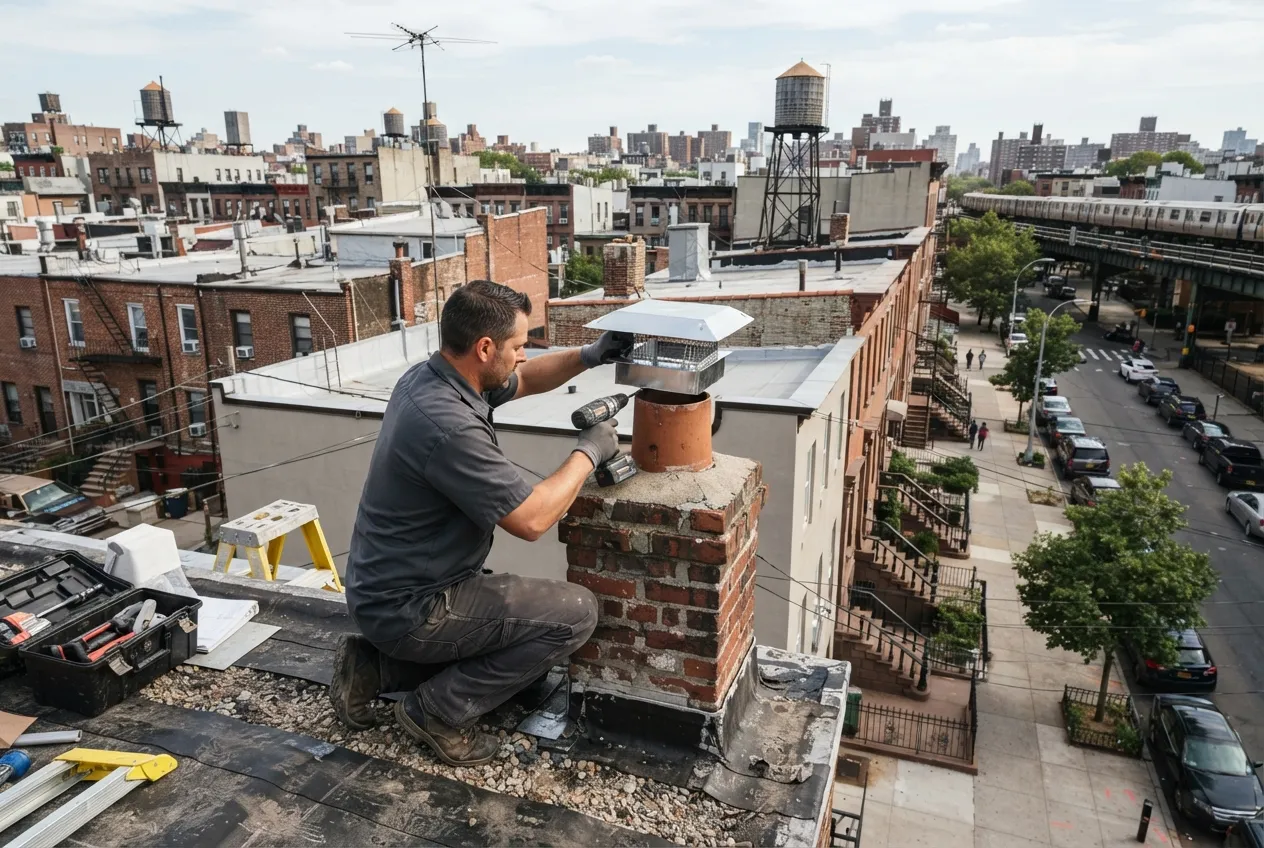
On the roof, our certified technicians set ladders and roof protection carefully, keep tools and old parts contained, and work around shingles, slate and flashing without stepping where they shouldn't. Rusted chase covers come off in one piece where possible. The new cap or cover is fit, fastened and checked for wobble, and the mesh is confirmed clear so the chimney can draw properly. When a camera inspection is part of the visit, we run it after the top is cleared, so you get an accurate picture of the flue.
The standard we follow
We follow the NFPA 211 standard, which calls for chimneys, fireplaces and vents to be inspected once a year. A cap or cover replacement is a good moment to do that inspection, since we're already on the roof and in the flue. Chimney professionals use three inspection levels: Level 1 when nothing about the system has changed, Level 2 when the system changes, such as a new appliance or a switch of fuel, or when the home is sold, and Level 3 when a hidden hazard has to be reached by opening part of the chimney or building.
For many New York City buildings, the cap is tied to a bigger question. When a building converts its boiler from oil to gas, the chimney has to be evaluated as part of the work, and a new liner is often needed because gas exhaust produces acidic condensate that can corrode a masonry flue. If your flue is changing, we size and plan the cap around the liner, not the other way around.
What affects the price
We give you a written quote after we've seen the chimney. The main things that shape the cost are:
- Chimney height, roof pitch and how easy the roof is to reach
- Whether it's a single-flue cap, a multi-flue cap or a custom chase cover
- Flue size and shape, and the condition of the crown or chase top
- The fuel the chimney serves, such as wood, gas or oil
- How much debris, nesting material or buildup has to be cleared first
- Whether a camera inspection is needed, or repairs to the crown, flashing or chase framing
How a visit works
You reach out and tell us what you're seeing, whether it's water in the firebox, animal noises or a rusted chase cover. We schedule a visit, and our technicians inspect the chimney, take measurements and photos, and explain what they found. If the cap or cover is the only issue, we can often install a standard cap the same day. Custom chase covers are made to measurement and installed on a return visit.
If we find something that should be handled first, like a cracked crown, damaged flue tile or a liner problem, we show you the photos and lay out your options before any work starts. Because New York City's heat season runs from October 1 through May 31, late summer and early fall are a smart time to get caps and covers in place, before the chimney is in regular use.