
The short answer
You likely need fireplace or damper repair if smoke spills into the room, the damper won't open or seal, or mortar and brick are flaking in the firebox. EverFlame inspects first, repairs dampers and fireboxes following the NFPA 211 standard, and gives you a written scope before any work starts.
A fireplace only works as well as the parts you don't see every day. These include the damper that opens and seals the flue, the firebox brick and mortar that take the heat, and the smoke chamber that funnels exhaust upward. When one of those parts fails, you may notice smoke rolling into the room, cold drafts in winter, or crumbling mortar on the hearth. EverFlame Chimney Care repairs fireplaces and dampers for homeowners in New York City and nearby cities, from brownstone parlor fireplaces to suburban masonry chimneys. Here is what to watch for, what the work includes, and how a visit goes.
Signs you need it
Most damper and firebox problems build slowly. These are the signs homeowners mention most often when they call us:
One sign alone doesn't always mean a major repair. A smell may come from buildup that a sweep removes. A stuck damper may need adjustment rather than replacement. The visit tells you which.
- A smoke or creosote smell in the room, especially on humid days or when the fireplace isn't in use
- Poor draft, where smoke spills out of the opening instead of rising up the flue
- Debris, mortar sand, or brick flakes collecting on the firebox floor
- White, chalky staining on the firebox or chimney brick, a sign that moisture is moving through the masonry
- Water in the firebox or rust on the damper after rain
- A damper handle that is stuck, loose, or won't stay closed, or cold air you can feel at the opening in winter
- Scratching or chirping above the damper, which often means animals have gotten in through a missing cap or open damper
What's included
Every fireplace and damper repair visit starts with an inspection so we know what we're fixing. The checklist below covers the standard scope. If your fireplace needs something beyond it, we'll tell you before starting.
- Visual inspection of the firebox, damper, smoke chamber, and accessible flue
- Damper test, including opening, closing, and checking the seal and handle
- Repair or replacement of throat dampers, including the frame, plate, and control hardware
- Top-sealing damper installation at the top of the chimney when the original damper can't be restored
- Firebox repair: repointing mortar joints and replacing cracked or spalled firebrick with heat-rated refractory materials
- Smoke chamber review, with parging recommendations where the surface is rough or gapped
- Check of the chimney cap and crown for gaps that let in water or animals
- Cleanup of the work area and a walk-through of what we found and did
- Written notes and photos for your records
How our crew works in your home and on the roof
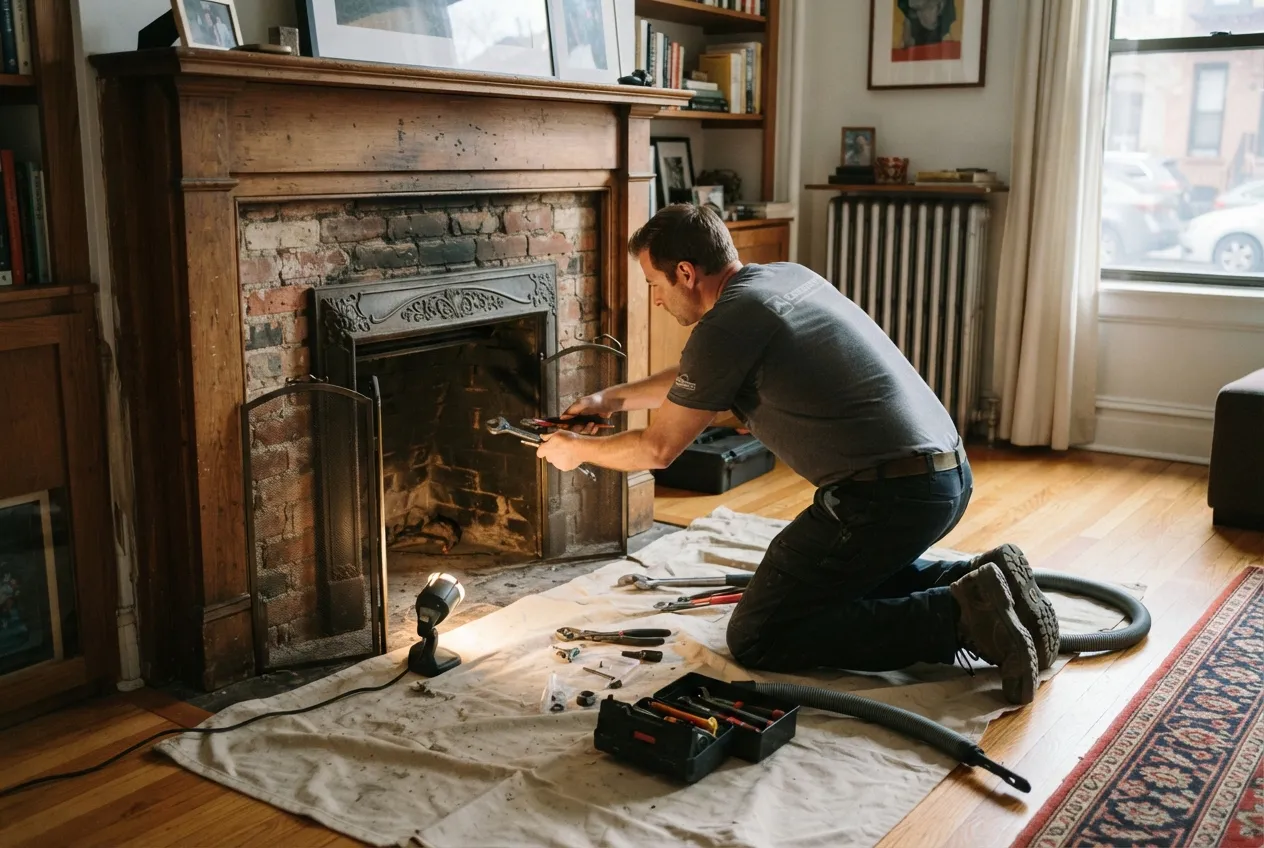
Inside, the crew lays drop cloths from the door to the hearth and covers the fireplace opening before any brushing or cutting. HEPA vacuums run during the work to keep soot and mortar dust out of the room. When the flue needs cleaning before repairs, our certified technicians use rotary brushes that scrub the liner walls.
Where we can't see clearly, we use a camera to look at the smoke chamber and flue. You can see any cracks, gaps, or loose liner sections on a screen for yourself.
On the roof, technicians check the crown, cap, and flashing, and install top-sealing dampers when that's part of the job. In the city, roof access often means coordinating with a building manager or going through a hatch. We confirm access when you book.
The standard we follow
Our work follows NFPA 211, the national standard for chimneys, fireplaces, and vents. It calls for these systems to be inspected once a year, even if you rarely use the fireplace.
Chimney professionals use three inspection levels. Level 1 applies when nothing about the system has changed. Level 2 applies when something changes, such as a new appliance or a switch of fuel, or when the home is sold. Level 3 applies when a hidden hazard has to be reached by opening part of the chimney or building. Most damper and firebox repairs start with a Level 1 or Level 2 inspection. If anything points toward Level 3, we'll explain why before taking that step.
If your building is converting its boiler from oil to gas, the chimney has to be evaluated as part of that work. A new liner is often needed because gas exhaust produces acidic condensate that can corrode a masonry flue. That's a separate project from fireplace repair, but we'll flag it if we see signs of it.
What affects the price
We price the job after the inspection, once we know what the repair actually involves. The main factors are listed below. You'll get the scope in writing before work begins.
- Height of the chimney and how hard the roof is to reach
- Fuel type: wood-burning, gas logs, or an insert
- Flue size, shape, and the condition of the liner
- How much soot or creosote has to be cleared before repairs
- Whether a camera inspection is needed to see the smoke chamber or flue
- The repair itself, such as adjusting a damper versus replacing it, or repointing a few joints versus rebuilding the firebox
How a visit works
When you book, tell us what you're noticing. We confirm the address, building type, and roof access.
On arrival, the crew protects the room, inspects the fireplace and damper, and shows you what they found. If the repair is straightforward and you approve it, they can often complete it during the same visit. Larger repairs, such as rebuilding a firebox, may need a return trip so the mortar can cure.
Before leaving, we clean up, test the damper, and review the results with you. New York City's heat season runs from October 1 through May 31. Many homeowners schedule fireplace repairs in late summer or early fall to get ahead of it.