
The short answer
You likely need chimney repair if you see brick flakes or mortar in the firebox, white staining on the brick, water after rain, or smoke that won't draft up the flue. EverFlame's certified technicians find the cause, explain it with photos or camera footage, and repair the masonry, crown, flashing, cap, liner or damper. We follow the yearly inspection practice in NFPA 211.
A chimney in New York takes steady punishment. Freeze-thaw cycles, wind-driven rain and years of exhaust slowly wear down mortar, crowns, flashing and flue liners. Small problems grow. A cracked crown lets water into the masonry, wet brick flakes apart, and open mortar joints create gaps where heat and smoke shouldn't go. EverFlame Chimney Care repairs chimneys for homeowners in New York City and nearby cities, from a single cracked flue tile to a rebuilt crown or a new liner. This page covers the warning signs, what a repair includes, how our crew works in your home and on your roof, and what affects the cost.
Signs you need chimney repair
Most chimney damage starts out of sight, but it usually leaves clues. If you notice any of these, have the chimney checked before your next fire or before the heating season starts.
White staining on brick is called efflorescence. It is salt left behind as water evaporates out of the masonry. It isn't harmful by itself. It does tell you water is getting in somewhere, usually through the crown, the flashing or open mortar joints.
- A smoky or tar-like creosote smell in the room, especially on humid days or when the fireplace isn't in use
- Poor draft, where smoke rolls into the room instead of rising up the flue
- Bits of brick, mortar or flue tile collecting in the firebox or on the smoke shelf
- White, chalky staining on the outside brick or inside the firebox
- Water dripping or pooling in the firebox after rain
- Scratching or chirping in the flue, which often points to a missing or damaged chimney cap
- A rusted damper, or a crumbling crown you can see from the street
What's included in a chimney repair
Every repair starts with finding the cause, not just patching the symptom. Depending on what we find, a repair visit can include:
Not every chimney needs every item. We tell you what is urgent, what can wait, and why.
- An inspection of the chimney, flue and fireplace at the level the situation calls for
- A plain-language explanation of what we found, with photos or camera footage
- Repointing: grinding out failing mortar joints and packing in fresh mortar
- Replacing spalled or cracked bricks
- Repairing or rebuilding the crown so it sheds water away from the flue
- Repairing or resealing flashing where the chimney meets the roof
- Installing or replacing a chimney cap with a screen to keep out rain and animals
- Flue liner repair or relining, including liners for oil-to-gas conversions
- Damper repair or replacement
- Cleanup of the work area inside and out
How our crew works inside your home and on the roof
Inside, we lay drop cloths from the door to the fireplace and cover the hearth and nearby furniture. Before we disturb anything in the flue, we set up a HEPA vacuum at the fireplace opening so soot and dust are pulled in rather than drifting into the room. If the flue needs cleaning before repair work, we use rotary brushes sized to the flue. Soot and loose debris can hide cracks, and a clean liner is easier to evaluate and repair.
When the problem isn't visible from the firebox or the top of the chimney, we run a camera up the flue to look for cracked tiles, gaps in mortar joints and damage to the liner. You can see the footage, so you know exactly what we're talking about.
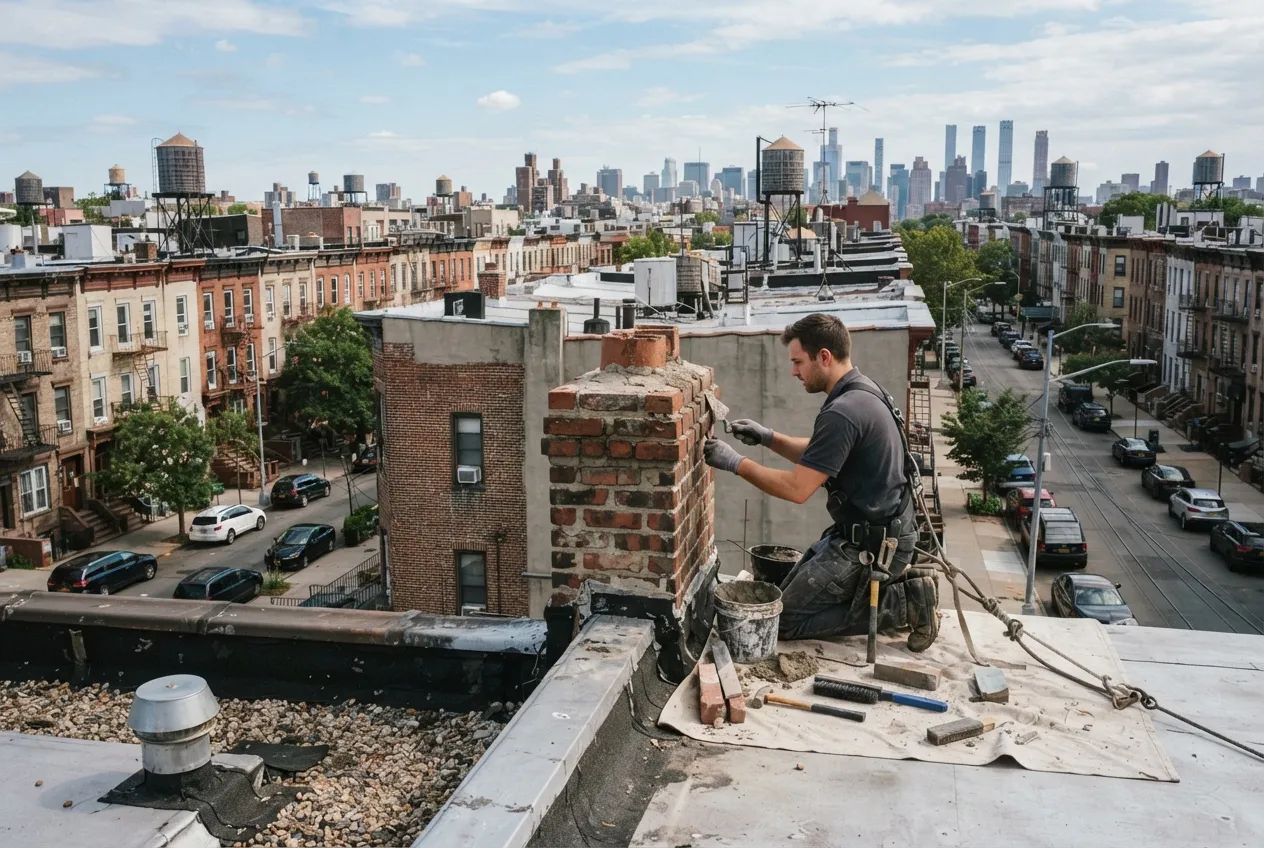
On the roof, we check the crown, cap, flashing and the brick above the roofline, where weather does most of its damage. We protect roofing around the chimney, keep tools and materials secured, and clear away mortar dust and old materials when we finish. On taller buildings or steep roofs, we use the access equipment the job requires.
The standard we follow
The NFPA 211 standard calls for chimneys, fireplaces and vents to be inspected once a year. Chimney professionals use three inspection levels. Level 1 is for when nothing has changed in the system. Level 2 is for when something changes, such as a new appliance or a switch in fuel, or when the home is sold. Level 3 is for when a hidden hazard has to be reached by opening part of the chimney or the building. We tell you which level fits your situation before we start.
Fuel changes matter in New York City. When a building converts its boiler from oil to gas, the chimney has to be evaluated as part of the work. A new liner is often needed, because gas exhaust produces acidic condensate that can corrode a masonry flue.
What affects the cost of chimney repair
Every chimney is different, so we price after we've seen it. The main factors are:
- Chimney height and how hard it is to reach the roof safely
- The fuel the chimney serves: wood, gas or oil
- Flue size, shape and current condition
- How much creosote or soot buildup has to be removed before repair
- Whether a camera inspection or a higher inspection level is needed
- How extensive the repair is, from a few joints of repointing to a rebuilt crown or a new liner
How a repair visit works
First, we talk through what you've noticed and set a time. When the technicians arrive, they protect the room, inspect the system and show you what they found. You get a clear explanation of the recommended repairs and the reasons for them before any work begins.
Some repairs, such as cap installation or minor repointing, can often be done the same visit. Larger work, such as crown rebuilding or relining, is scheduled separately so we can bring the right materials. When we finish, we clean up and walk you through what was done.
New York City's heat season runs from October 1 through May 31. Spring and summer are good times to handle repairs, so your chimney is ready when the heat comes on.
Chimney Repair by city
- Chimney Repair in Lincoln Square
- Chimney Repair in Upper West Side
- Chimney Repair in Carnegie Hill
- Chimney Repair in Hell’s Kitchen
- Chimney Repair in Upper East Side
- Chimney Repair in Midtown
- Chimney Repair in Times Square
- Chimney Repair in Lenox Hill
- Chimney Repair in Roosevelt Island
- Chimney Repair in East Midtown
- Chimney Repair in Turtle Bay
- Chimney Repair in Yorkville