
The short answer
Clean your dryer vent when clothes take longer to dry, the laundry area runs hot, or you see lint at the outside hood. The U.S. Fire Administration identifies failure to clean as the leading factor in home clothes dryer fires. Our crew cleans the full run from the dryer to the exterior termination and checks the airflow before we leave.
Every load of laundry sends warm, damp air and fine lint out through your dryer vent. Most of that lint leaves the house, but some of it settles inside the duct, especially at bends, low spots and the exterior hood. Over time that buildup narrows the passage, traps heat and makes the dryer work harder. EverFlame Chimney Care cleans dryer vents for homeowners in New York and nearby cities. That includes the short run behind the dryer, the duct inside walls and ceilings, and the termination outside or on the roof. This page covers the signs that point to a clogged vent, what our cleaning includes, how our certified technicians work inside your home, what affects the cost, and what to expect on the day of the visit.
Signs you need it
A clogged dryer vent usually shows up gradually, so it's easy to blame the dryer. The warning signs below point to the vent. If you notice more than one, schedule a cleaning before you keep running full loads.
- Clothes need two cycles, or towels come out damp on a normal setting
- The dryer, the laundry room, or the top of the machine feels unusually hot
- A burning or scorched smell while the dryer runs
- Lint collecting around the dryer door, behind the machine, or at the exterior vent hood
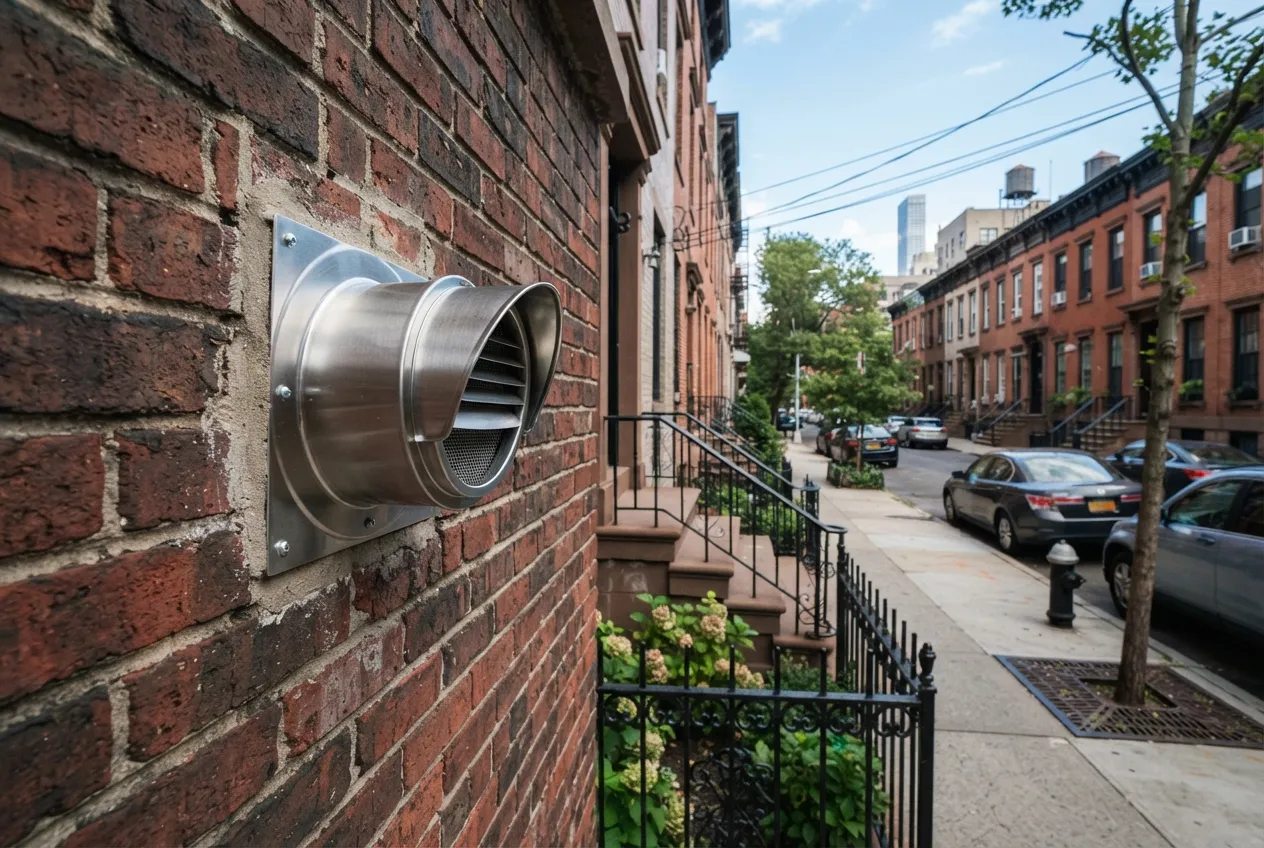
- The outside flap barely opens, or you feel weak airflow there while the dryer is on
- Bird, rodent, or insect noises near the vent, or nesting material at the termination
- The dryer shuts off mid-cycle or shows a vent or airflow warning
What's included in a dryer vent cleaning
Each visit covers the whole exhaust path, not just the lint trap. Before we finish, we show you what came out and tell you what we found.
- Pull the dryer out safely and disconnect the transition duct
- Inspect the transition duct for crushing, kinks, tears, or plastic or foil material that should be replaced
- Clean the full vent run with rotary brushes and air whips sized to the duct
- Collect the debris with HEPA vacuums at the dryer end
- Clear the exterior hood or roof termination, including lint, nests, and stuck dampers
- Clean the lint trap housing inside the dryer
- Run a camera through the duct where the run is long, hidden, or hard to reach
- Reconnect the dryer, run it, and check airflow at the termination
- Explain any problems we find, such as a run that is too long, has too many elbows, or has a damaged section
How our crew works inside your home and on the roof
Laundry areas in New York homes are often tight. You may have a stacked unit in a closet, a basement corner, or a machine set into a kitchen nook. Before we move anything, we put down drop cloths along the path and around the dryer. We set up a HEPA vacuum at the open end of the duct so loosened lint is pulled into the machine instead of into your home.
We feed rotary brushes through the duct in sections. They scrub lint off the duct walls while the vacuum draws it out. For long runs, or runs that go through ceilings and walls, we use a camera to check for hidden blockages, separated joints, or crushed spots that brushing alone wouldn't reveal.
Some vents end on a side wall. In row houses, multi-story homes, and some converted buildings, they end on the roof. When the termination is on the roof, a technician goes up with proper fall safety, clears the cap or hood, and brushes from the top down if the run needs it. Roof caps often hold the heaviest lint because moisture makes it cling, and birds like to nest in them. When the work is done, we clean up the laundry area and leave it the way we found it.
Why regular cleaning matters
According to the U.S. Fire Administration, failure to clean is the leading factor contributing to clothes dryer fires in homes. Lint burns easily. A restricted vent also traps heat around the dryer's heating element, which is the condition that leads to trouble.
A clean vent also helps your dryer work better day to day. Loads dry faster, the machine runs fewer cycles, and less heat and humidity stay in your laundry area. How often you need cleaning depends on how much laundry you do and how the vent is routed. Larger households and long or roof-terminated runs usually need more frequent attention than a short, straight run through an exterior wall.
What affects the price
Every vent run is different, so we price the job after we know how your system is set up. These are the main factors:
- Length of the run and the number of bends between the dryer and the termination
- Where the vent ends: a ground-level wall, an upper-story wall, or the roof
- Roof access and building height
- How much lint has built up, and whether there are nests or other blockages
- Whether a camera inspection is needed to see hidden sections
- Whether repairs are needed, such as replacing a crushed transition duct, reconnecting a separated joint, or fixing a damaged hood or cap
- Gas or electric dryer, which can change how we disconnect and reconnect the appliance
How a visit works
When you contact us, we ask where your dryer is, where the vent ends outside, and what you've noticed. That helps us bring the right equipment and set aside enough time. On the day of the visit, please clear a path to the dryer and, if you can, empty the machine.
The technician starts with a quick look at the dryer, the transition duct, and the exterior termination. Then we protect the area, clean the full run, clear the outside end, and reconnect everything. Before we leave, we run the dryer and check airflow. We'll go over what we found and recommend any repairs, and we won't do extra work without your approval. Most homeowners can start a load as soon as we're finished.