
The short answer
A chimney sweep clears soot, creosote and debris from your flue and checks the parts you can't see from inside the house. The NFPA 211 standard calls for a yearly chimney inspection. Call sooner if you notice smoke smells, poor draft, debris in the firebox or water after rain.
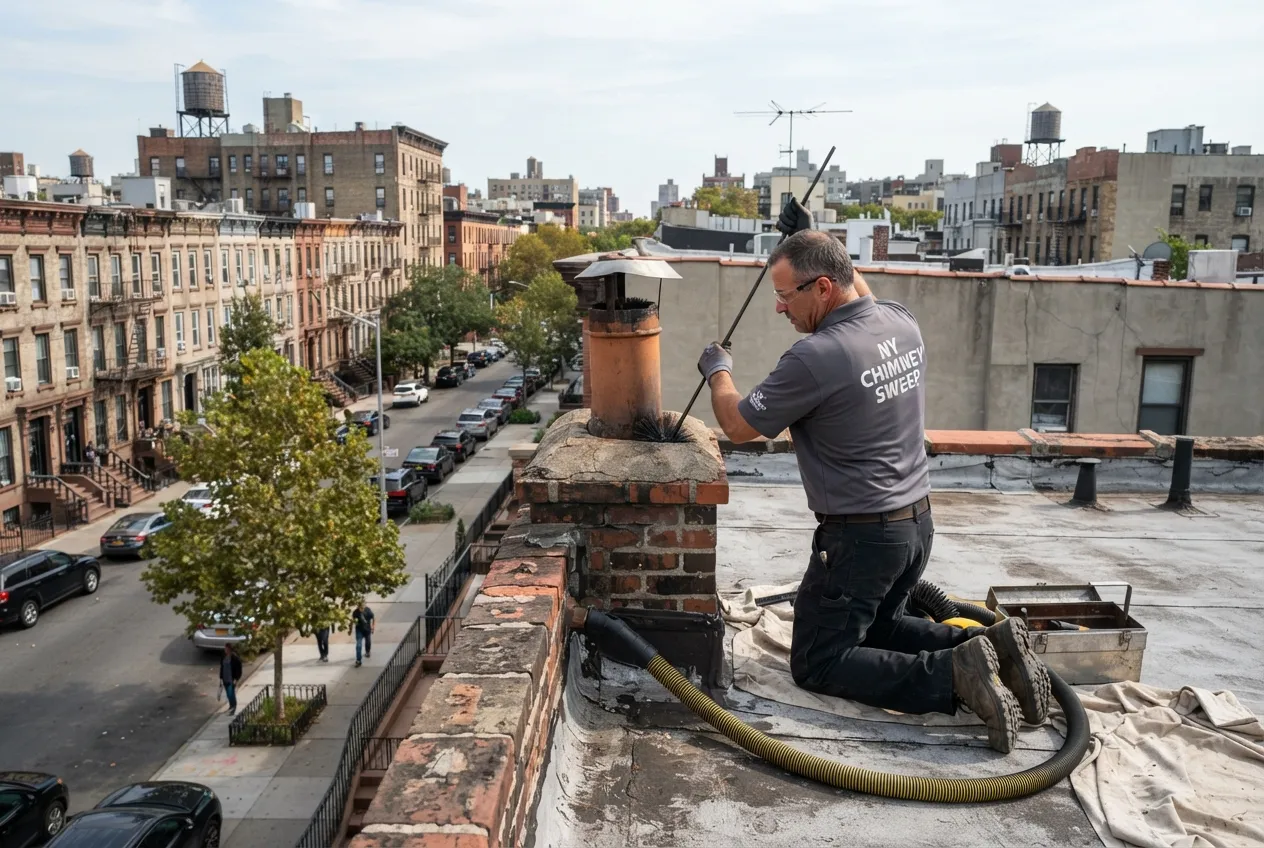
A chimney sweep removes the soot, creosote and debris that build up inside a flue every time you burn wood, oil or gas. EverFlame Chimney Care sweeps fireplace chimneys and appliance flues for homeowners in New York City and nearby cities, from brownstones and row houses to suburban homes with wood stoves. Our certified technicians clean the flue, check the parts you can't see from the living room, and explain plainly what they found. This page covers when to call, what a sweep includes, how we work in your home and what affects the cost.
Signs you need a chimney sweep
Most homeowners book a sweep on a schedule, but some problems show up between visits. If you notice any of these, stop using the fireplace or appliance until the flue has been checked.
- A smoky or campfire-like smell in the room, especially on humid days or when the air conditioning runs. This is often a sign of creosote buildup.
- Poor draft. Smoke rolls into the room, fires are hard to start, or they die down quickly.
- Black flakes, crumbled mortar or pieces of brick landing in the firebox.
- White, chalky staining on the brick inside or outside, which points to moisture moving through the masonry.
- Scratching, chirping or rustling in the chimney, usually from birds, squirrels or raccoons.
- Water or rust in the firebox or on the damper after rain.
What's included in every sweep
A standard sweep covers more than running a brush down the chimney. Every visit includes the following:
- Protecting the floor and furniture around the fireplace before any work starts.
- Sweeping the flue from top to bottom with rotary brushes sized to the flue.
- Cleaning the smoke chamber, smoke shelf, damper and firebox.
- Removing soot, creosote, nests and loose debris, and capturing it with HEPA-filtered vacuums.
- Checking that the damper opens, closes and seals properly.
- A visual check of the firebox, mortar joints, flue liner and chimney crown where they can be reached.
- A look at the chimney cap and screen when the roof can be safely reached.
- A plain-language summary of what we found, with photos when they help explain a problem.
How our crew works in your home and on the roof
Inside, the crew lays drop cloths from your door to the hearth and seals the fireplace opening before brushing, so soot stays in the chimney instead of your living room. A HEPA vacuum runs throughout the sweep and pulls fine dust out at the source. Rotary brushes on flexible rods scrub the flue walls without the hard scraping that can damage an older liner.
When the brush can't tell us enough, we run a camera up the flue. It shows cracked flue tiles, gaps in mortar joints, hardened glazed creosote and blockages. We can show you the footage right there so you see the same thing we do.
On the roof, technicians check the crown, cap, flashing and the top of the flue. Many city buildings have limited or shared roof access, so we confirm access when you book. If the roof can't be reached safely, we sweep from below and tell you exactly what we could not inspect.
The standard we follow
The NFPA 211 standard calls for chimneys, fireplaces and vents to be inspected once a year. A sweep and an inspection go together. Cleaning the flue lets us see its true condition, and the inspection tells us whether it's safe to use.
Chimney professionals use three inspection levels. Level 1 applies when nothing about the system has changed. Level 2 applies when the system changes, such as a new appliance or a switch of fuel, or when the home is sold. Level 2 typically includes a camera inspection. Level 3 applies when a hidden hazard can only be reached by opening part of the chimney or building. Most routine sweeps fall under Level 1, and we'll tell you if your situation calls for more.
If your building is converting its boiler from oil to gas, the chimney has to be evaluated as part of that work in New York City. A new liner is often needed, because gas exhaust produces acidic condensate that can corrode a masonry flue.
New York City's heat season runs from October 1 through May 31. Booking a sweep before it starts means your flue is ready when the heat goes on.
What affects the price
Every chimney is different. We'll talk through these factors before any work begins, so you know what to expect:
- The height of the chimney and how hard the roof is to reach.
- Fuel type: wood, oil and gas each leave different residue.
- The size, shape and condition of the flue.
- How much soot and creosote has built up, including hardened glazed creosote that takes extra work to remove.
- Whether a camera inspection is needed.
- Whether we find repairs, such as a damaged cap, cracked crown or failing liner.
How a visit works
When you call, we ask about your fireplace or appliance, the fuel you burn, the type of building and how the roof is reached. That way the crew arrives with the right brushes and equipment. Please let the fire or appliance cool completely before we arrive, and clear a path to the hearth.
On the day, the technicians protect the work area, sweep and inspect the system, and clean up before they leave. Afterward, they walk you through what they found, show you photos or camera footage, and explain anything that needs attention. Repairs are always a separate decision. We explain the options and you decide what to do next.
Chimney Sweep by city
- Chimney Sweep in Lincoln Square
- Chimney Sweep in Upper West Side
- Chimney Sweep in Carnegie Hill
- Chimney Sweep in Hell’s Kitchen
- Chimney Sweep in Upper East Side
- Chimney Sweep in Midtown
- Chimney Sweep in Times Square
- Chimney Sweep in Lenox Hill
- Chimney Sweep in Roosevelt Island
- Chimney Sweep in East Midtown
- Chimney Sweep in Turtle Bay
- Chimney Sweep in Yorkville