
The short answer
Carnegie Hill chimneys, many in older brownstones and pre-war buildings, should be inspected once a year under the NFPA 211 standard and swept when the inspection shows buildup. EverFlame's certified technicians clean the flue, smoke chamber and firebox, check the damper and masonry, and explain clearly what they found.
Carnegie Hill has many working fireplaces in its brownstones, townhouses and pre-war apartment buildings, and many of them are used only now and then. That is why a regular sweep matters. Soot and creosote build up quietly, debris and nesting material settle in during the off months, and older masonry flues wear with age. EverFlame Chimney Care sends certified technicians from our Lincoln Square office, about a mile away, to clean and check chimneys throughout the neighborhood. This page covers what a sweep involves, what we look for in older Manhattan homes, and how to plan around building rules and the heating season.
What a Chimney Sweep Includes
A sweep removes the soot, creosote and debris that collect inside the flue, the smoke chamber and the firebox. Creosote is the tar-like residue wood smoke leaves behind as it cools on its way up the chimney. A thin layer mostly hurts the draft. As it thickens, it becomes fuel for a chimney fire.
We protect the room before we start. We work from the fireplace and, when access allows, from the roof. Our brushes and vacuum equipment are sized to your flue so dust stays out of your living space.
- Drop cloths and a sealed vacuum setup at the hearth
- Brushing the flue, smoke shelf and smoke chamber
- Cleaning the firebox and checking that the damper opens, closes and seals
- A visual check of the firebox, damper, crown and cap where we can reach them
- A plain-language rundown of what we found, with photos when they help
What We Look For in Brownstones and Pre-War Buildings
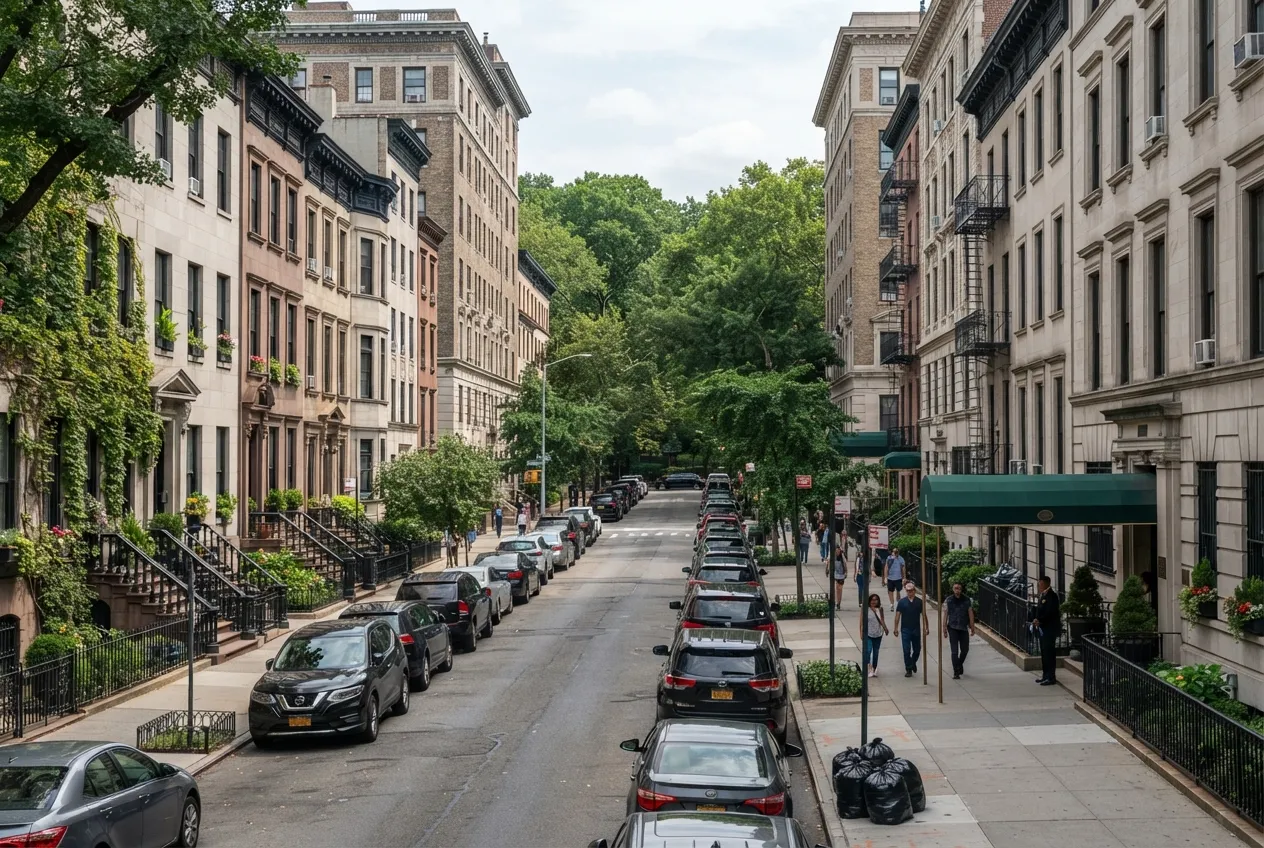
Much of Carnegie Hill's housing is older brownstones, rowhouses and pre-war apartment buildings. Many of these chimneys were built long before modern liners and fire codes. Some fireplaces have been reopened after decades of being sealed off. Those details shape how we approach each sweep.
In older masonry flues we watch for cracked or missing clay tiles, eroded mortar joints, loose brick in the smoke chamber, and dampers that have rusted or warped. In row buildings with shared party walls, a flue can sit right next to a neighbor's, so gaps in the masonry matter more than they might in a detached house. If something needs more than cleaning, we tell you what it is and what your options are. We don't add work on the spot.
How Often to Sweep, and What an Inspection Adds
The NFPA 211 standard calls for chimneys, fireplaces and vents to be inspected once a year. Inspection and sweeping are different jobs. The inspection tells you whether the chimney needs cleaning or repair, and the sweep does the cleaning. We usually do both on the same visit.
Chimney professionals use three inspection levels. Level 1 fits when nothing about the system has changed. Level 2 applies when something does change, such as a new appliance or a switch of fuel, or when the home is sold. Level 3 is for cases where a hidden hazard can only be reached by opening part of the chimney or building.
A wood-burning fireplace used often through the winter may need sweeping more than once a year. One lit only a few times a season often needs less. We base our recommendation on what we actually find in the flue.
Oil-to-Gas Conversions and Chimney Liners
Some Carnegie Hill buildings have switched, or are planning to switch, from oil to gas heat. When a New York City building converts its boiler from oil to gas, the chimney has to be evaluated as part of the work. A new liner is often needed, because gas exhaust produces acidic condensate that can corrode a masonry flue.
If your building or townhouse is planning a conversion, a sweep and inspection beforehand gives you and your contractor a clear picture of the flue's condition. That makes the liner decision easier.
Planning Around Your Building and the Heating Season
New York City's heat season runs from October 1 through May 31. During that time, building owners must keep apartments heated to the city's minimum temperatures. If your boiler vents through a chimney, late spring and summer are the practical window for cleaning and inspection, because the system can be taken offline without leaving residents cold. Fireplace owners benefit from the same timing. Booking before fall avoids the seasonal rush and leaves time for any repairs.
In co-ops and condos, the managing agent or super often has to approve roof access and set work hours, and we can coordinate with them directly. We also serve the nearby Upper East Side, Yorkville, Lenox Hill, Roosevelt Island and the Upper West Side.
More services in Carnegie Hill
- Chimney Inspection in Carnegie Hill
- Chimney Repair in Carnegie Hill
- Air Duct Cleaning in Carnegie Hill
- Chimney Liner Installation in Carnegie Hill