
The short answer
A chimney sweep removes creosote, soot and debris from your flue so smoke vents properly and the risk of a chimney fire goes down. The NFPA 211 standard calls for a yearly inspection, and late summer or early fall is a good time to schedule one in Lenox Hill, before heat season begins on October 1.
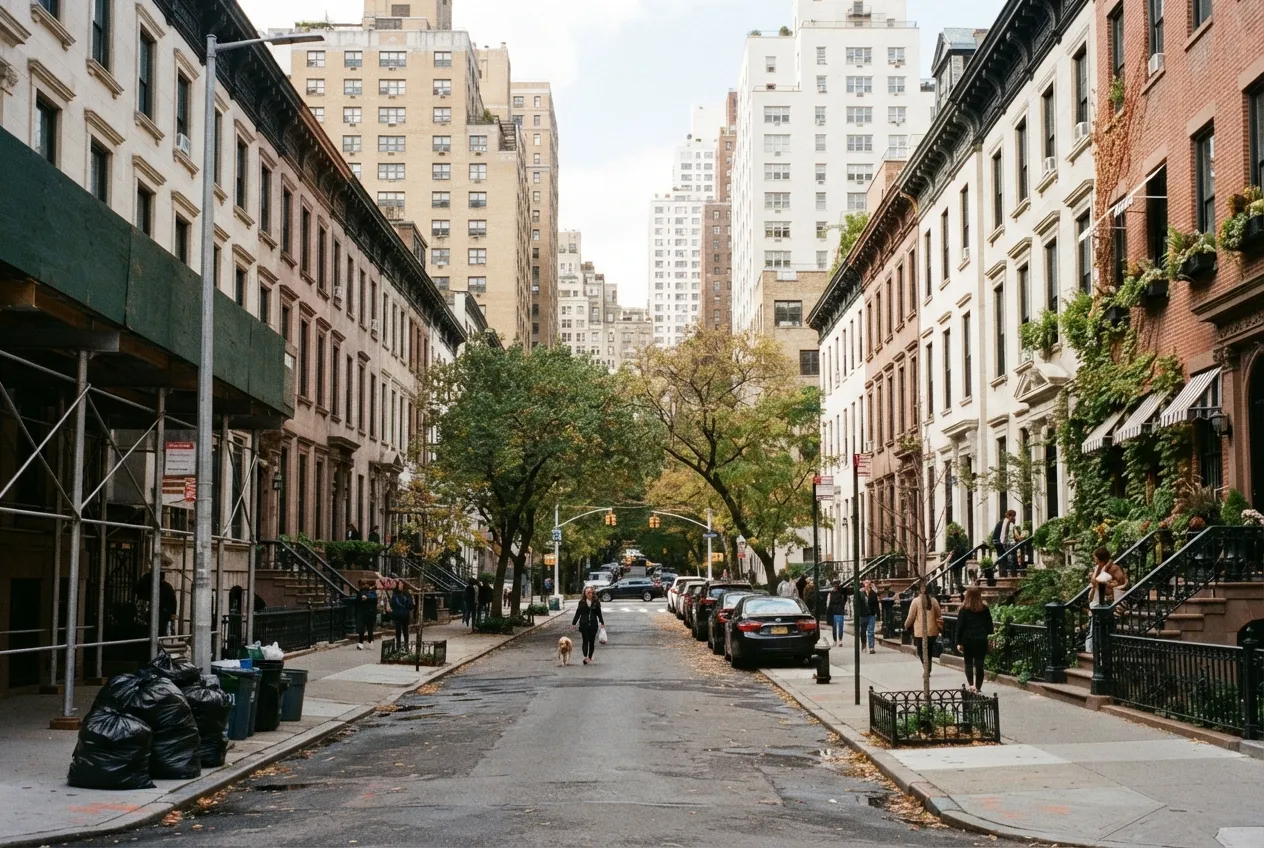
Lenox Hill's housing is mostly brownstones, limestone townhouses and pre-war apartment buildings. Many of these homes still have working wood-burning fireplaces, and many have flues that have been relined, capped or reused over the decades. EverFlame Chimney Care sends certified technicians from our Lincoln Square office, about a mile away, to sweep and check chimneys across ZIP codes 10021, 10065 and 10075, and in nearby Roosevelt Island, Yorkville, Carnegie Hill, East Midtown and the wider Upper East Side. We want your fireplace to draw cleanly and your flue to be free of buildup and blockages before you light the next fire.
What a sweep covers in a Lenox Hill home
Every visit starts with a look at the firebox, damper and smoke chamber, then moves up the flue. We lay down drop cloths and seal the fireplace opening. Then we use brushes and rods sized to your flue, with a vacuum running so soot stays out of your living room.
Older brownstones and townhouses often have narrow or offset masonry flues, so we pick tools to match the flue rather than forcing one size through every chimney.
- Removal of creosote and soot from the flue, smoke chamber and smoke shelf
- Clearing of debris, nesting material and fallen mortar
- Check that the damper opens, closes and seals
- Look at the firebox for cracked brick or missing mortar
- A written summary of what we found, with photos when possible
Why older Manhattan flues need regular attention
Creosote is a tar-like residue left behind when wood smoke cools inside the flue. It builds up faster when fires burn slowly or the wood is damp, and in thick layers it can catch fire. Masonry chimneys from the pre-war era can also have gaps in the clay tile liner or deteriorated mortar joints. A sweep can't always see these from below, which is why cleaning and inspection go together.
The NFPA 211 standard calls for chimneys, fireplaces and vents to be inspected once a year. A Level 1 inspection fits most homes where nothing has changed. A Level 2 inspection applies when the system changes, such as a new appliance or a switch of fuel, or when the home is being sold. A Level 3 inspection is for cases where a hidden hazard can only be reached by opening part of the chimney or building.
Timing your sweep around New York's heat season
New York City's heat season runs from October 1 through May 31, when building owners must keep apartments heated to the city's minimum temperatures. For townhouse owners and co-op boards, that makes late summer and early fall the practical window for a sweep. Problems found then can be fixed before boilers and fireplaces run every day.
If you only use your fireplace a few times a winter, a yearly inspection is still worthwhile. Animals, leaves and loose masonry can block a flue that sat unused.
Oil-to-gas conversions and building chimneys
Many Lenox Hill apartment buildings and larger townhouses have switched boilers from oil to gas. When a New York City building converts from oil to gas, the chimney has to be evaluated as part of the work. A new liner is often needed because gas exhaust produces acidic condensate that can corrode a masonry flue.
If your building is planning a conversion, or finished one and never had the chimney looked at, we can sweep the flue and assess the liner. Your board or contractor then gets a clear picture of its condition.
Working in co-ops, condos and townhouses
Apartment buildings often have rules about service visits, elevator use and work hours. We can coordinate with your managing agent or superintendent, and we can provide the details they ask for before the appointment. In townhouses we usually need access to both the fireplace and the roof, so let us know about roof hatches or shared roof access when you book.
More services in Lenox Hill
- Chimney Inspection in Lenox Hill
- Chimney Repair in Lenox Hill
- Air Duct Cleaning in Lenox Hill
- Chimney Liner Installation in Lenox Hill