
The short answer
EverFlame Chimney Care repairs chimney masonry, crowns, caps, dampers, and flue liners for brownstones, rowhouses, and pre-war apartment buildings across Midtown Manhattan. Every repair starts with an inspection so the work matches the real problem, including liner work that is often needed after an oil-to-gas boiler conversion.
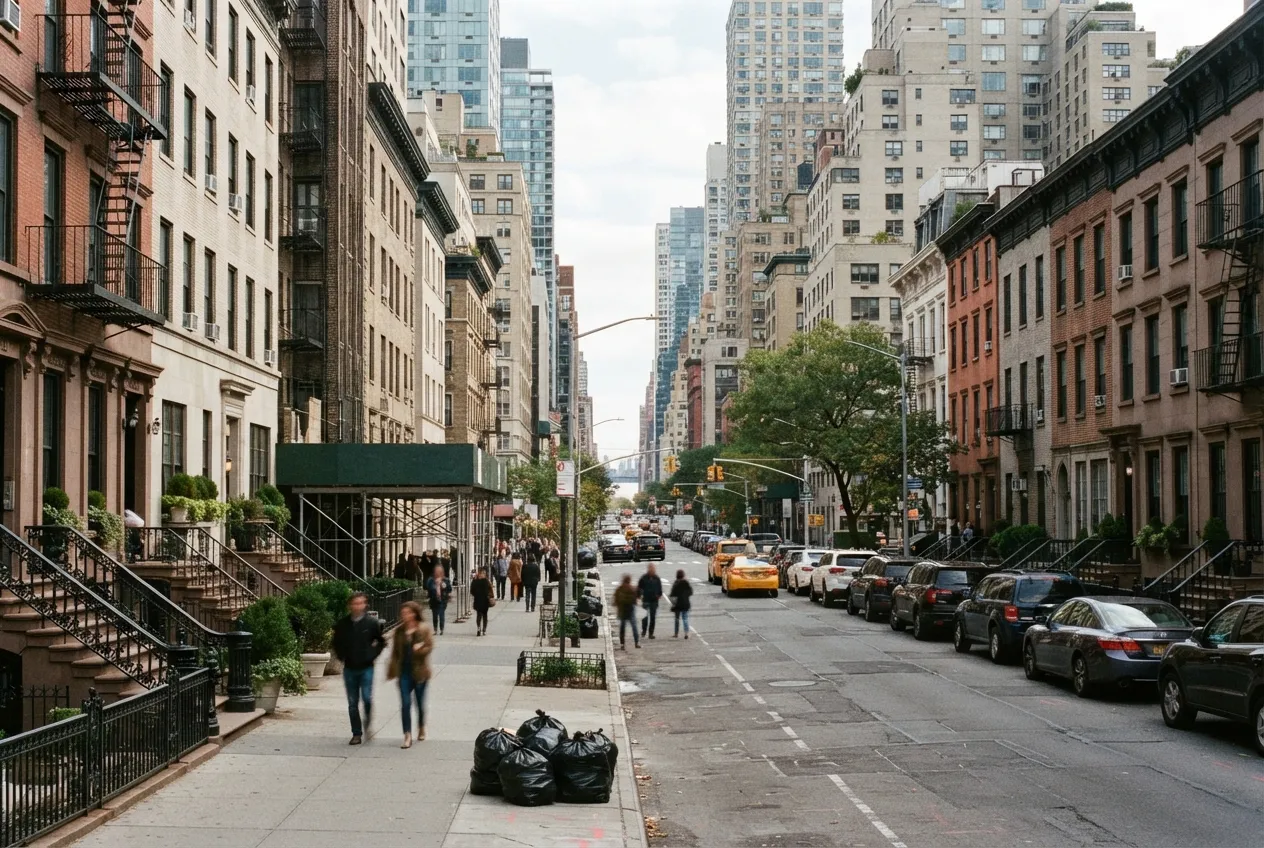
Chimneys in Midtown work hard. Many serve pre-war apartment buildings with central boilers, while others run up the back of brownstones and rowhouses on quieter side streets, often with a working fireplace or two. Decades of freeze-thaw cycles, wind exposure at roof level, and the switch from oil to gas heat all take a toll on masonry, crowns, and flue liners. EverFlame Chimney Care repairs chimneys for homeowners, co-op boards, and building owners throughout Midtown, about a mile south of our Lincoln Square office. Our certified technicians start by finding out what is actually wrong, explain what they found in plain terms, and recommend repairs that fit your chimney and how you use it.
Common Chimney Problems in Midtown Buildings
Most Midtown chimneys are brick or masonry and have been in service for a long time. The parts that fail first are usually the ones most exposed to weather or exhaust. A cracked crown lets water into the top of the stack, loose mortar joints let moisture work deeper into the brick, and a damaged or missing cap invites rain, debris, and nesting birds. Inside the chimney, clay tile liners can crack or separate, and older unlined flues can deteriorate where acidic exhaust condenses on the masonry.
In brownstones and rowhouses, we also see fireplace problems: dampers that no longer seal, cracked firebox brick, and smoke chamber surfaces that have broken down over years of use.
- Cracked or crumbling chimney crowns
- Deteriorated mortar joints and spalling brick
- Missing, rusted, or damaged chimney caps
- Cracked, gapped, or corroded flue liners
- Leaking flashing where the chimney meets the roof
- Warped or broken fireplace dampers and damaged firebox brick
Liner Repair After an Oil-to-Gas Conversion
Many Midtown buildings have moved their boilers from oil to gas. When a New York City building makes that switch, the chimney has to be evaluated as part of the work, and a new liner is often required. Gas exhaust produces acidic condensate, and over time that moisture can corrode a masonry flue that was built for oil.
If your building has converted or is planning to, we can evaluate the existing flue, explain whether it can keep serving the new equipment, and install a properly sized liner when one is needed. A change of fuel or appliance is also the kind of change that calls for a more detailed inspection, so we look closely at the full length of the flue rather than only what is visible at the top or bottom.
How We Approach a Repair
Every repair begins with an inspection. The NFPA 211 standard calls for chimneys, fireplaces, and vents to be inspected once a year, and it describes three levels. A Level 1 inspection fits when nothing has changed. A Level 2 inspection applies when the system changes, such as a new appliance or a switch of fuel, or when the home is sold. A Level 3 inspection is used when a hidden hazard has to be reached by opening part of the chimney or building.
Once we know the condition of the chimney, we walk you through what needs attention now, what can be monitored, and what each repair involves. In apartment buildings, we work around building rules for roof access, scheduling, and protecting common areas, and we keep owners and managers informed throughout the job.
Timing Repairs Around Heat Season
New York City's heat season runs from October 1 through May 31, and during those months building owners must keep apartments heated to the city's minimum temperatures. A chimney problem that takes a boiler offline in January is far harder to deal with than one fixed in summer. For buildings with central heat, we recommend scheduling inspections and any needed repairs in the warmer months, before the boiler is running full time.
Homeowners with fireplaces benefit from the same planning. Repairing a damper, crown, or liner before the first cold snap means the fireplace is ready when you want to use it.
Serving Midtown and Nearby Neighborhoods
We repair chimneys throughout Midtown, including the 10020, 10103, 10110, 10111, 10112, 10153, 10165, 10173, and 10177 ZIP codes. Because our office is in Lincoln Square, Midtown is close by, which makes it easier to schedule inspections and follow-up visits. We also serve Times Square, East Midtown, Turtle Bay, Hell's Kitchen, and Lincoln Square, where the mix of brownstones, rowhouses, and pre-war apartment buildings presents many of the same repair needs.
More services in Midtown
- Chimney Sweep in Midtown
- Chimney Inspection in Midtown
- Air Duct Cleaning in Midtown
- Chimney Liner Installation in Midtown