
The short answer
Upper West Side chimneys should be swept as needed and inspected once a year, as the NFPA 211 standard calls for. EverFlame Chimney Care's certified technicians sweep fireplaces in brownstones, rowhouses and pre-war apartments, protect your floors and furnishings, and explain anything that needs attention.
Many Upper West Side homes still have working fireplaces. You'll find them in brownstone parlors, rowhouse bedrooms, and pre-war apartments where a wood-burning hearth was part of the original layout. These chimneys are often old, tall, and shared with other parts of the building, so a sweep here involves more than running a brush up the flue. EverFlame Chimney Care is based in Lincoln Square, about a mile south, and our certified technicians sweep chimneys across ZIP codes 10023, 10024, 10025 and 10069. We remove creosote and debris, check the parts of the system we can see, and tell you plainly what we found.
What a Chimney Sweep Covers
A sweep removes the creosote, soot and loose debris that build up inside a flue every time you burn a fire. Creosote is flammable, and thick deposits are what feed chimney fires. We clean from the firebox up through the smoke chamber and flue. Along the way we look at the parts that tend to cause trouble in older Manhattan fireplaces.
- Firebox, damper and smoke shelf cleaned of soot and debris
- Smoke chamber and flue brushed to remove creosote buildup
- Damper checked for a full seal when open and closed
- Visible flue liner and masonry checked for cracks, gaps or missing mortar
- Chimney cap and crown looked over when roof access allows
- Written notes on what we found and what, if anything, needs follow-up
Brownstones and Rowhouses
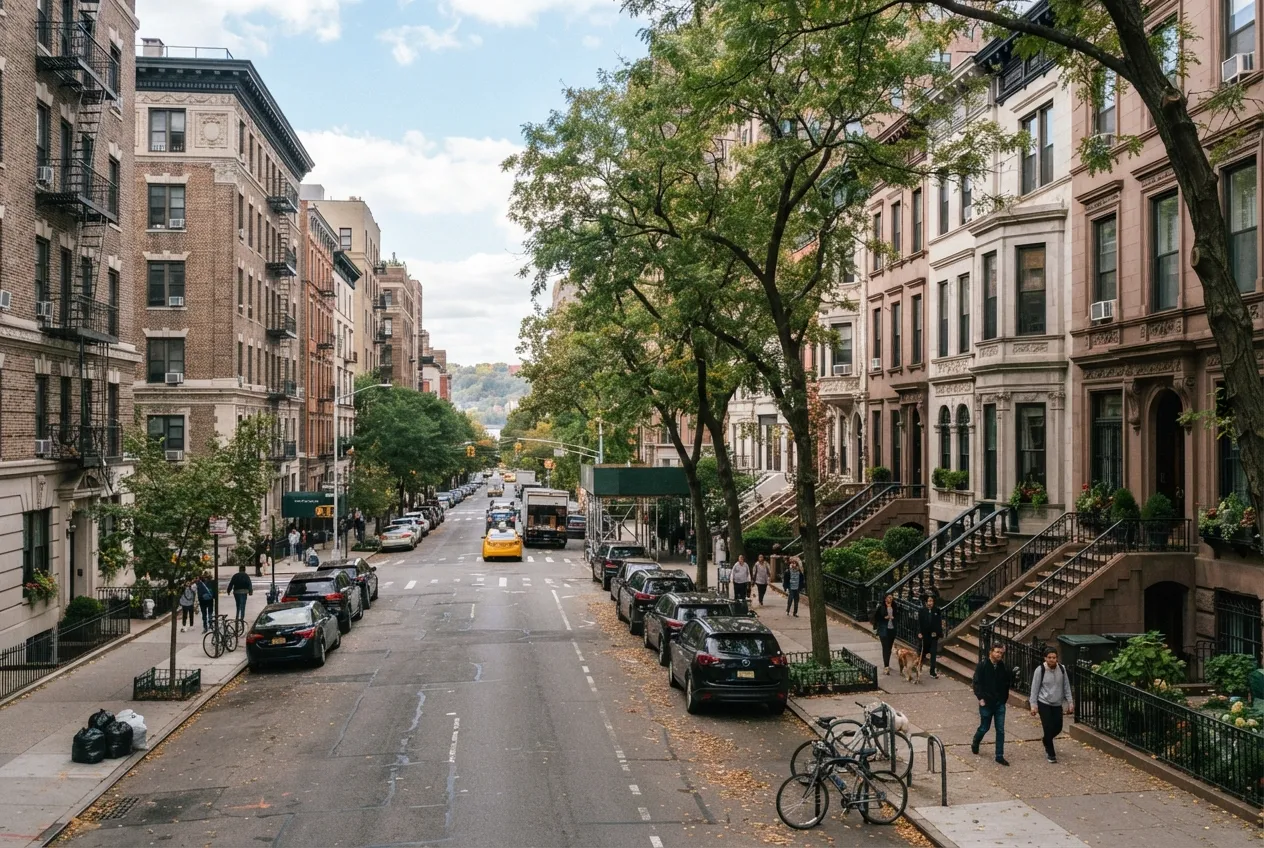
Upper West Side brownstones and rowhouses often have several fireplaces stacked floor over floor. Each one usually has its own flue, and those flues run side by side inside a single masonry chimney. Over the decades, some fireplaces were closed off, some were converted to decorative use, and some were reopened by later owners. Before we light anything or call a fireplace usable, we confirm which flue serves which fireplace and whether that flue is clear and lined.
Old flues in these buildings may be unlined clay or bare brick. Some were relined years ago and some were never relined at all. A sweep is often the first time anyone has looked closely in a long while. If we see deteriorated mortar, a cracked liner, or signs that a flue was blocked off, we'll explain the issue and the options. We won't push work you don't need.
Pre-War Apartment Buildings and Co-ops
Wood-burning fireplaces in pre-war apartment buildings bring their own logistics. Many buildings set rules for contractor hours, elevator use and roof access, and some require paperwork before a contractor can start work. We can work with your building's management or superintendent to schedule access. We bring drop cloths and enclosed equipment so we don't carry soot through common hallways.
Larger buildings also have boiler chimneys, which serve the heating plant rather than individual fireplaces. When a New York City building converts its boiler from oil to gas, the chimney has to be evaluated as part of the work. A new liner is often needed, because gas exhaust produces acidic condensate that can corrode a masonry flue. If your building is planning that kind of change, the chimney should be part of the conversation early.
How Often to Schedule a Sweep
The NFPA 211 standard calls for chimneys, fireplaces and vents to be inspected once a year. Sweeping is done when the inspection shows buildup that needs to come out. For most homes that burn wood regularly, that means a sweep at least once a year. A routine check with no changes to the system is a Level 1 inspection. A Level 2 inspection applies when you buy or sell a home, add a new appliance, or switch fuels. Level 3 is reserved for cases where a hidden problem can only be reached by opening part of the chimney or wall.
Timing matters in New York City. Heat season runs from October 1 through May 31, and schedules tend to fill as the weather turns. Booking a sweep in late summer or early fall gets your fireplace ready before you want to use it.
Signs Your Fireplace Is Due
Even between annual visits, some signs suggest your chimney needs attention.
- Smoke rolling back into the room instead of drawing up the flue
- A strong, smoky or tar-like smell, especially in humid weather
- Black, flaky or shiny deposits visible above the damper
- Debris, nesting material or bits of masonry falling into the firebox
- A fireplace you've never used since moving in, or one that sat idle for years
More services in Upper West Side
- Chimney Inspection in Upper West Side
- Chimney Repair in Upper West Side
- Air Duct Cleaning in Upper West Side
- Chimney Liner Installation in Upper West Side