
The short answer
Chimney repair on Roosevelt Island usually means fixing crowns, flashing, mortar and flue liners on apartment building chimneys, plus fireplace repairs in individual units. A certified technician inspects first, then recommends only the repairs the chimney needs. Boiler-related work is easiest to schedule outside the city's October through May heat season.
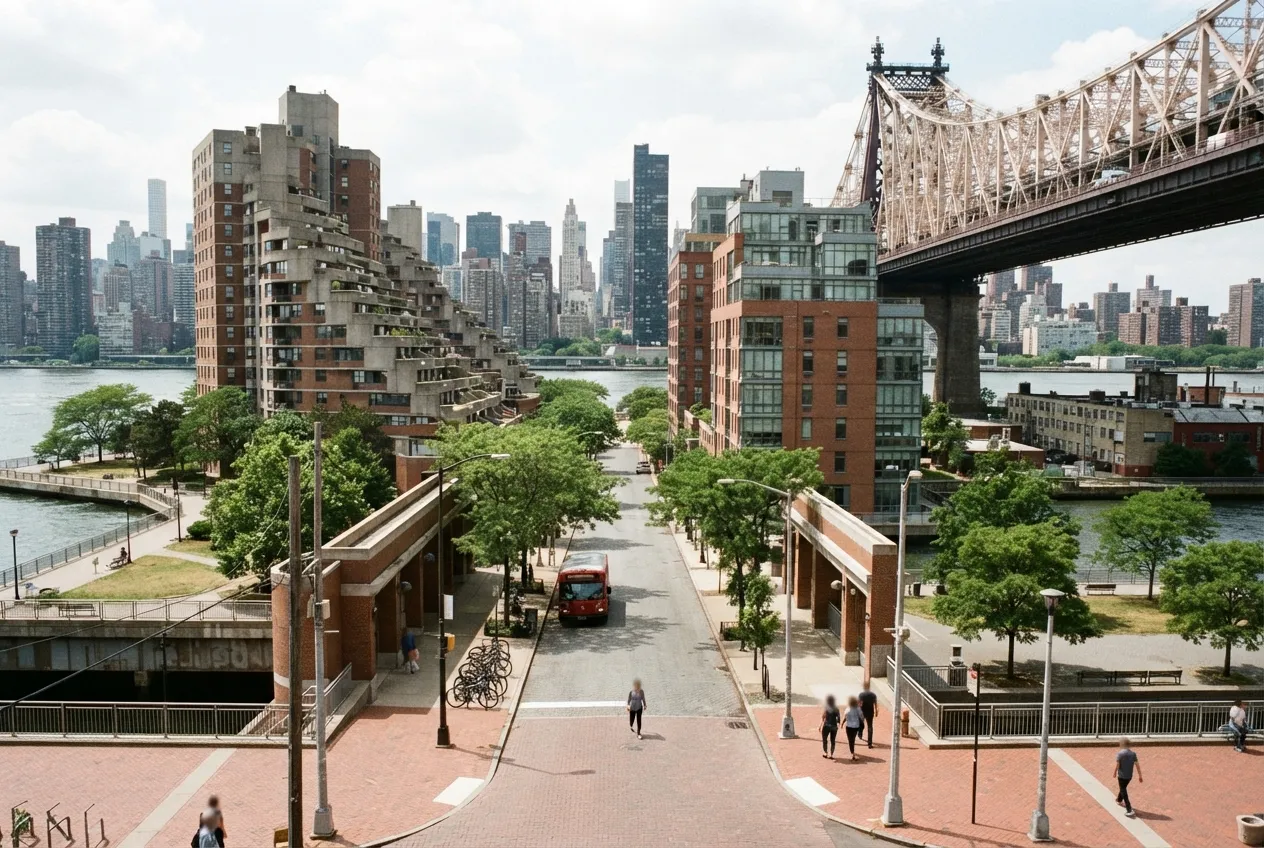
Roosevelt Island sits about a mile southeast of our Lincoln Square office, and EverFlame Chimney Care handles chimney repair for residents, co-op and condo boards, and building managers across the island. Most homes here are in mid-rise and high-rise apartment buildings, so much of our chimney work centers on the flues that carry exhaust from a building's boiler or water heater. Some apartments also have fireplaces or their own vented appliances. In either case, the goal is the same: a chimney that carries exhaust safely out of the building and keeps water out of the structure.
Common Chimney Problems in Roosevelt Island Buildings
Chimneys on larger residential buildings take a beating. They stand above the roofline in open exposure to wind and rain off the river, go through repeated freeze-thaw cycles, and run hot for months every winter. That combination slowly wears down masonry and the seals between the chimney and the roof.
These are the repairs we're most often called for:
- Cracked or crumbling chimney crowns that let water into the flue and surrounding masonry
- Loose, eroded or missing mortar joints that need repointing
- Spalling brick, where the face flakes off after water gets in and freezes
- Failed flashing where the chimney meets the roof, often showing up as leaks or stains on top-floor ceilings
- Cracked, shifted or deteriorated flue tiles and liners
- Damaged chimney caps, dampers or cleanout doors
Fireplace Repairs in Individual Apartments
If your apartment has a fireplace, we look at the parts you can see and the ones you can't. Common issues include worn or cracked firebox mortar, dampers that stick or no longer seal, damaged smoke chambers, and water staining around the hearth or surrounding wall.
Small problems are easier and less disruptive to fix when they're caught early, before water reaches framing, plaster or a neighbor's ceiling. Because a fireplace flue often runs through shared parts of the building, we'll recommend checking with your board or management before work begins.
Why Every Repair Starts With an Inspection
The NFPA 211 standard calls for chimneys, fireplaces and vents to be inspected once a year, and an inspection is also how we decide what actually needs fixing. A Level 1 inspection fits when nothing about the system has changed. A Level 2 is the right choice when the system changes, such as a new boiler or a switch of fuel, or when an apartment or building is sold. A Level 3 is reserved for cases where a suspected hazard is hidden and part of the chimney or building must be opened to reach it.
After the inspection, we explain what we found, share photos, and lay out repair options in writing so a resident, board or manager can make an informed decision.
Oil-to-Gas Conversions and Flue Relining
When a New York City building converts its boiler from oil to gas, the chimney has to be evaluated as part of the work. Gas exhaust produces acidic condensate that can corrode a masonry flue originally built for oil, so a new liner is often needed. We assess the existing flue, recommend a liner suited to the new equipment, and install it so the chimney is ready when the boiler returns to service.
Relining is also the usual fix when existing clay tiles are cracked or displaced, since a sound liner keeps heat and exhaust contained inside the flue.
Scheduling Around New York City's Heat Season
New York City's heat season runs from October 1 through May 31, and building owners must keep apartments at the city's minimum temperatures throughout. Repairs that require taking a boiler offline are simplest to plan for June through September. If a problem appears mid-winter, we work with the building to plan around heating needs and keep any shutdown as short as the repair allows.
Serving Roosevelt Island and Nearby Manhattan Neighborhoods
We work throughout Roosevelt Island, ZIP code 10044, and in the surrounding Manhattan ZIP codes 10021, 10065, 10075 and 10162. Our technicians also handle chimney repair in Lenox Hill, the Upper East Side, Carnegie Hill, Yorkville and East Midtown, where brownstones, rowhouses and pre-war apartment buildings with working fireplaces are more common.
More services in Roosevelt Island
- Chimney Sweep in Roosevelt Island
- Chimney Inspection in Roosevelt Island
- Air Duct Cleaning in Roosevelt Island
- Chimney Liner Installation in Roosevelt Island