
The short answer
EverFlame Chimney Care sweeps and inspects fireplace chimneys in Upper East Side brownstones, townhouses and pre-war apartment buildings. NFPA 211 calls for a yearly inspection, and late spring or summer is the easiest time to schedule before the fall rush.
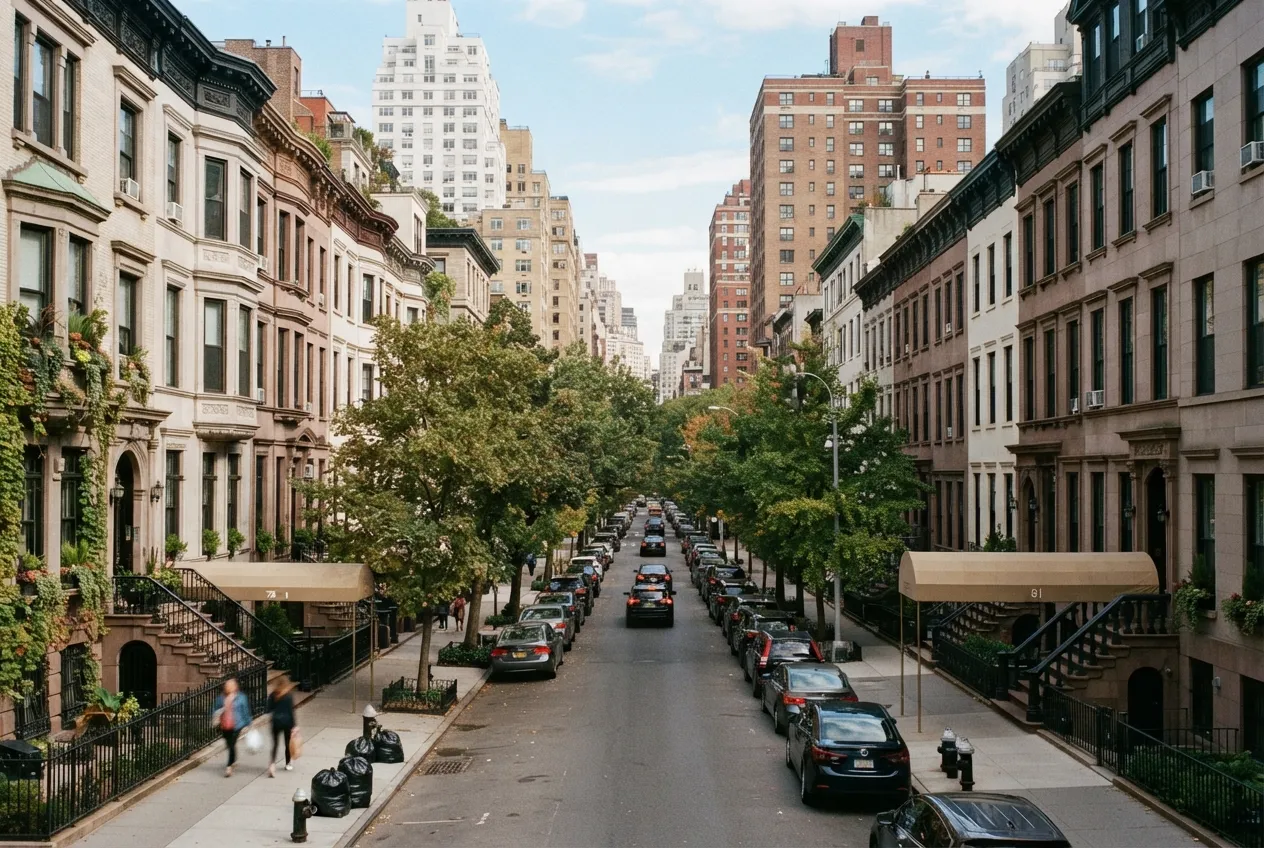
On the Upper East Side, a working fireplace is often one of the oldest features in the home. Many brownstones, townhouses and pre-war apartments still have their original masonry flues, and in some homes several fireplaces are stacked floor over floor. EverFlame Chimney Care sends certified technicians from our Lincoln Square office, about a mile east, to sweep and inspect these chimneys. We work across ZIP codes 10021, 10028, 10044, 10065, 10075, 10128 and 10162, and in nearby Carnegie Hill, Lenox Hill, Roosevelt Island, Yorkville and East Midtown.
What a chimney sweep includes
A sweep removes creosote, soot and debris from the flue, smoke chamber, smoke shelf and firebox. Creosote is the tar-like residue wood smoke leaves as it cools on its way up the chimney. A thin layer mostly affects draft. A heavier buildup is fuel for a chimney fire. Older Manhattan flues are often tall and narrow, and some were not designed for the way wood fires are burned today, so buildup can come on faster than owners expect.
We protect the room before we start. Floors, rugs and furniture near the hearth are covered, and we work with brushes and rods while a vacuum keeps dust contained. In finished interiors with plaster walls, millwork and stone mantels, that containment matters as much as the cleaning.
- Firebox, damper, smoke shelf and smoke chamber cleaned
- Flue brushed from the top or from below, depending on roof access
- Visual check of the damper, firebox walls and the visible flue liner
- Written notes on anything that needs repair, with photos where we can get them
Brownstones and townhouses with more than one fireplace
Many single-family townhouses and brownstones have a fireplace on several floors, each with its own flue running up the same masonry stack. We sweep and check every flue separately. A parlor fireplace used every weekend and a bedroom fireplace that hasn't been lit in years have very different problems. Unused flues often collect nests, fallen mortar and debris that block the draft the first time someone lights a fire.
Roof access in attached rowhouses can be limited, so we plan ahead and decide whether to go through a bulkhead or hatch or work entirely from below. If a fireplace was closed off or turned into a decorative one, tell us when you book so we can check whether it is safe to use again.
Pre-war apartment buildings and co-ops
Some pre-war apartment buildings still have working wood-burning fireplaces in individual units. In those buildings the chimney usually passes other apartments on its way to a shared roof, so a sweep often has to be coordinated with building management or the superintendent. Many co-op and condo boards also ask residents to show that a fireplace was cleaned and inspected before they use it.
We schedule around building rules on work hours, elevator use and roof access. Afterward you get written notes you can pass along to management. If the concern is the building's boiler chimney rather than your unit's fireplace, we handle that work with the owner or managing agent.
Sweeping and inspection go together
The NFPA 211 standard calls for chimneys, fireplaces and vents to be inspected once a year, so we inspect while we sweep. A Level 1 inspection fits a chimney that is being used the same way it always has been. A Level 2 inspection is the right step when something changes, such as a new insert or stove or a switch in fuel, or when the home is being sold. A Level 3 inspection opens part of the chimney or wall. It is needed only when a hidden problem has to be reached.
Sweeping can turn up cracked flue tiles, eroded mortar joints, or hardened, glazed creosote that brushes won't remove. If it does, we explain what we found and your options before any further work.
Timing around the heat season and boiler conversions
New York City's heat season runs from October 1 through May 31, and most fireplace use on the Upper East Side falls in the same months. Late spring and summer are the easiest times to book a sweep, and early fall fills up quickly once the weather turns. Sweeping after the last fire of the season also keeps leftover creosote from sitting in the flue all summer, where it can cause odors on humid days.
If your townhouse or building is converting its boiler from oil to gas, the chimney has to be evaluated as part of that work. Gas exhaust creates acidic condensate that can corrode a masonry flue, so a new liner is often needed. We can sweep out years of oil soot first so the flue can be properly assessed.
More services in Upper East Side
- Chimney Inspection in Upper East Side
- Chimney Repair in Upper East Side
- Air Duct Cleaning in Upper East Side
- Chimney Liner Installation in Upper East Side