
The short answer
The NFPA 211 standard calls for chimneys, fireplaces and vents to be inspected once a year, and East Midtown homes are no exception. EverFlame Chimney Care performs Level 1, 2 and 3 inspections for townhouses, brownstones, co-ops and pre-war apartment buildings, with timing planned around the city's heat season.
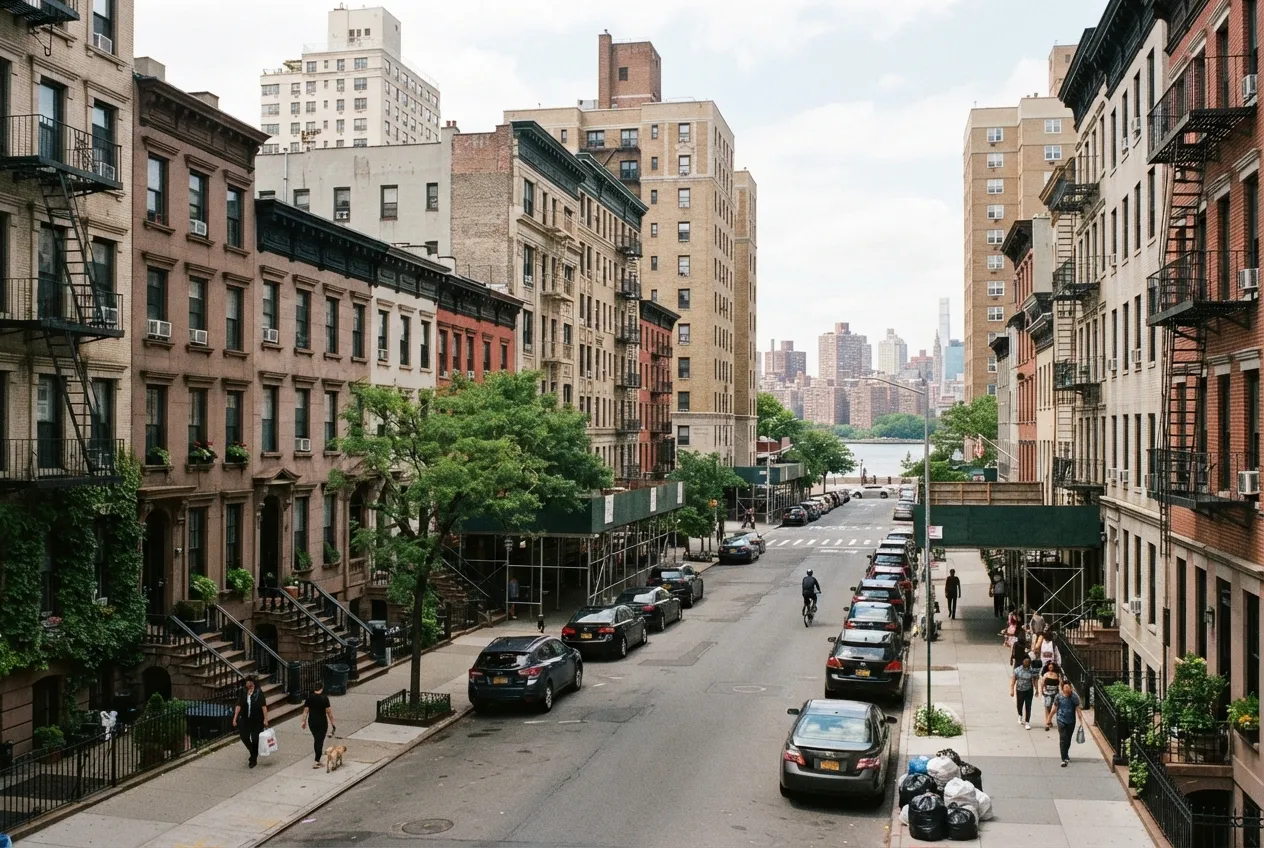
East Midtown has a wide mix of homes: pre-war apartment buildings, co-ops and condos with central boilers, and townhouses and brownstones with working or decorative fireplaces. Each type has a chimney or flue that needs regular attention, whether it vents a wood-burning fireplace, a gas insert, or a building's heating plant. EverFlame Chimney Care sends certified technicians from our office in Lincoln Square, about 2 miles north, to inspect chimneys throughout East Midtown. We look at the whole venting system, explain what we find in plain terms, and tell you which problems need attention now and which can wait.
Which Inspection Level Your Home Needs
The NFPA 211 standard calls for chimneys, fireplaces and vents to be inspected once a year. Chimney professionals use three inspection levels, and the right one depends on what has changed in your home since the last inspection.
Most East Midtown homeowners need a Level 1 inspection each year. A Level 2 inspection is called for when something changes, which happens often in this neighborhood when apartments are renovated, co-op units are bought and sold, or buildings update their heating systems.
- Level 1: For a system that hasn't changed. We check the accessible parts of the chimney, the firebox or appliance connection, and the flue for blockages and buildup.
- Level 2: For a new appliance, a switch of fuel, or a home sale. It includes everything in Level 1, plus a closer look at the attic, the roof and the flue interior, usually with a camera.
- Level 3: For a suspected hidden hazard that can only be reached by opening part of the chimney or building. We recommend this only when earlier findings point to it.
What We Check in East Midtown Homes
Chimneys in older Manhattan buildings have often been through decades of heating changes, patch repairs and renovations. In a townhouse or brownstone, the fireplace flue may share a chimney stack with other flues, and repointing or interior work over the years can hide damage. In apartment buildings, the main concern is usually the boiler chimney and the connections that feed into it.
During an inspection, we focus on the conditions that affect safety and proper draft:
- Creosote and soot buildup inside fireplace flues
- Cracked, missing or deteriorated flue tiles and liners
- Loose or eroded mortar joints, spalling brick and crown damage
- Missing or damaged chimney caps, which let in rain, debris and birds
- Damper operation and smoke chamber condition
- Appliance connector pipes and their joints at the chimney
- Signs of water entry, such as staining, efflorescence or rusted components
Oil-to-Gas Conversions and Chimney Liners
Many Manhattan buildings have switched their boilers from oil to gas. When a New York City building converts its boiler from oil to gas, the chimney has to be evaluated as part of the work. A new liner is often needed, because gas exhaust produces acidic condensate that can corrode a masonry flue over time.
If your building is planning a conversion or has finished one recently, a Level 2 inspection shows whether the existing flue is suitable or whether it needs a liner. We explain what we find so the building owner or managing agent can plan the next steps.
Scheduling Around the Heat Season
New York City's heat season runs from October 1 through May 31. During those months, building owners must keep apartments heated to the city's minimum temperatures, so a boiler chimney problem found in midwinter can be hard to fix without disrupting tenants.
The best time to book an inspection is late spring through early fall, before the boiler runs full-time and before you light the first fire of the season. That leaves time for repairs to be scheduled without pressure. If you notice smoke backing up, strong odors, or debris falling into the firebox at any time of year, stop using the fireplace or appliance and schedule an inspection.
Areas We Serve In and Around East Midtown
We inspect chimneys across East Midtown, including ZIP codes 10017, 10022, 10152, 10154, 10167, 10169, 10170, 10171, 10172 and 10174. Our technicians also work regularly in nearby Turtle Bay, Midtown, Times Square, Lenox Hill and Roosevelt Island, so scheduling is straightforward for homes anywhere in this part of Manhattan.
More services in East Midtown
- Chimney Sweep in East Midtown
- Chimney Repair in East Midtown
- Air Duct Cleaning in East Midtown
- Chimney Liner Installation in East Midtown