
The short answer
Wood-burning fireplaces and chimneys in East Midtown should be inspected once a year under the NFPA 211 standard and swept when soot or creosote has built up. EverFlame's certified technicians clean and inspect chimneys in East Midtown townhouses, brownstones, co-ops and pre-war apartment buildings, and they work around building access rules.
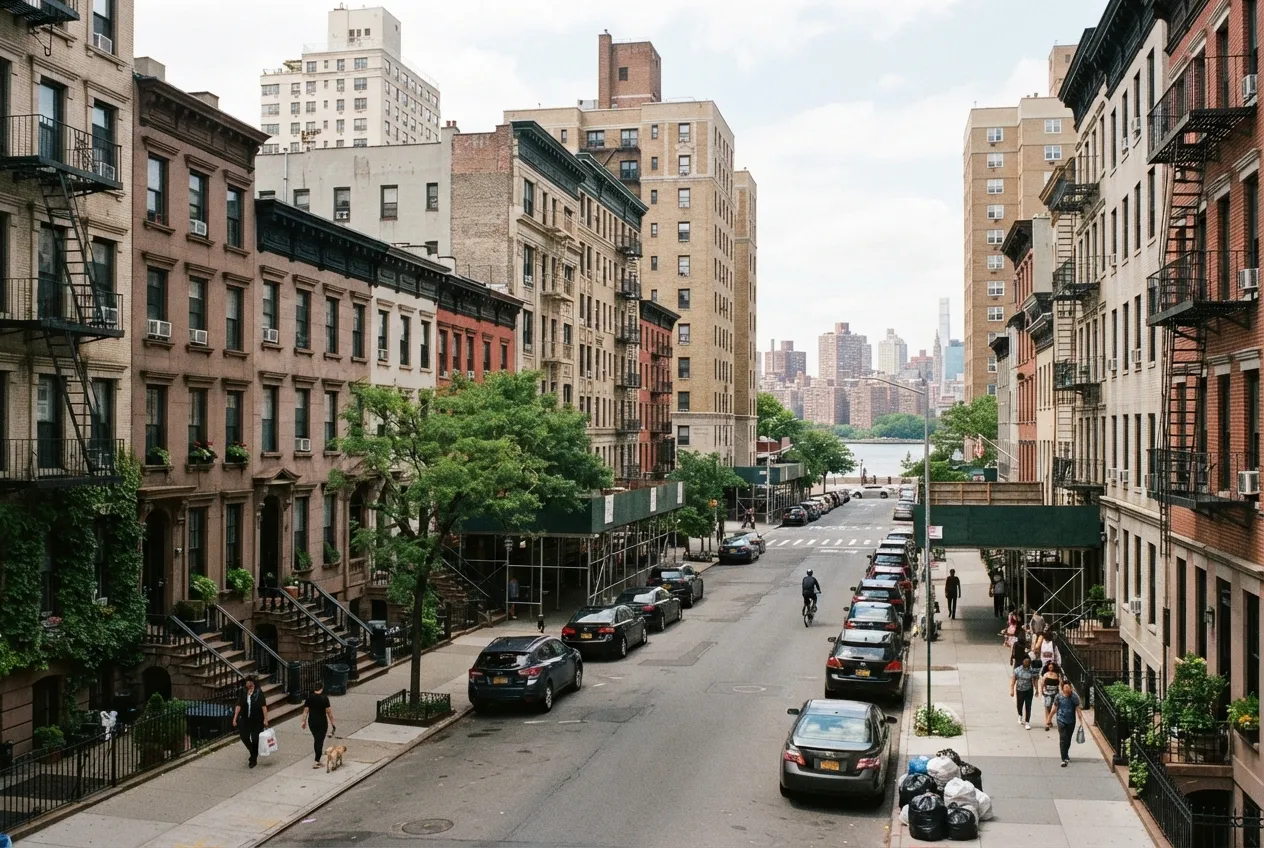
East Midtown has more working fireplaces than many people expect. Pre-war co-ops, converted townhouses and brownstones on the quieter side streets, and apartment buildings with original masonry chimneys all need regular sweeping to burn safely. EverFlame Chimney Care sends certified technicians from our Lincoln Square office, about 2 miles north, to homes and buildings across East Midtown's ZIP codes, including 10017 and 10022. We clean the flue, remove soot and creosote, check the parts you can't see from the hearth, and explain what we found in plain terms. This page covers what a sweep involves for the kinds of homes found in East Midtown and how to plan one around building rules and the heating season.
Why East Midtown Chimneys Need Regular Sweeping
Many fireplaces in East Midtown were built decades ago and run through tall masonry stacks that share walls with neighboring units or buildings. When wood burns, it leaves soot and creosote on the inside of the flue. Creosote is flammable, and a thick layer can catch fire inside the chimney. Even a fireplace that gets only a few fires each winter can collect enough buildup over a season or two to restrict the draft and send smoke back into the room.
Older flues also tend to have problems that only show up on close inspection. These include cracked clay tiles, missing mortar between bricks, and debris that has fallen from the top of the stack. In a dense neighborhood where chimneys sit inches from the next unit, catching these problems early protects your home and the people around you.
What Our Chimney Sweep Includes
A standard visit combines a thorough cleaning with a basic inspection, so you know the chimney is clean and can still be used. We protect floors and furnishings before we start and use sealed vacuum equipment to keep soot out of the living space. This matters in apartments with finished floors, rugs and upholstered furniture close to the hearth.
- Brushing the flue from the firebox up, or from the roof down where the building allows roof access
- Removing soot, creosote and loose debris from the firebox, smoke shelf and damper area
- Checking the damper for smooth opening and a proper seal
- Looking at visible flue tiles, the firebox walls and the hearth for cracks or gaps
- Noting nests, fallen masonry or other blockages
- A plain explanation of what we found and whether anything needs follow-up
Working Within Co-op and Building Rules
Many East Midtown homeowners live in co-ops or condominiums where the board or managing agent controls roof access, work hours and contractor paperwork. Before we arrive, we can help you find out what the building needs, such as advance notice to the superintendent, scheduled elevator time or permission to reach the chimney top. Townhouse and brownstone owners usually have more freedom, but roof access can still be tight. We plan the visit around whatever route the building allows.
If your building converts its boiler from oil to gas, keep in mind that New York City requires the chimney to be evaluated as part of that work. A new liner is often needed, because gas exhaust produces acidic condensate that can wear away a masonry flue. A sweep and inspection before or during a conversion gives the building a clear picture of the flue's condition.
Annual Inspections and When a Deeper Look Is Needed
The NFPA 211 standard calls for chimneys, fireplaces and vents to be inspected once a year. Chimney professionals use three inspection levels. A Level 1 inspection fits when nothing about the system has changed. A Level 2 inspection is called for when the system changes, such as a new appliance or a switch of fuel, or when the home is sold. A Level 3 inspection is used when a hidden hazard can only be reached by opening part of the chimney or building.
For most East Midtown fireplaces in regular use, a yearly sweep paired with a Level 1 inspection is enough. If you're buying or selling a co-op or townhouse, or you've changed how you heat, ask us about a Level 2 inspection.
Planning Around the Heating Season
New York City's heat season runs from October 1 through May 31. Fireplace use in East Midtown follows that calendar, so late summer and early fall are the busiest times for chimney work. Booking a sweep before the cold weather arrives makes it easier to coordinate with your building and to deal with any repairs before you want your first fire.
We also serve nearby neighborhoods, including Turtle Bay, Midtown, Times Square, Lenox Hill and Roosevelt Island. If you own more than one property in the area, we can often schedule the visits close together.
More services in East Midtown
- Chimney Inspection in East Midtown
- Chimney Repair in East Midtown
- Air Duct Cleaning in East Midtown
- Chimney Liner Installation in East Midtown